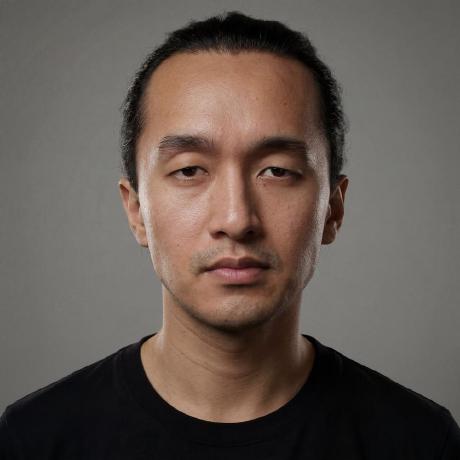
伊藤 ショーン (Sean Carino Ito)
Native Mobile & Full-Stack Software Engineer · Founder
Summary
Full-stack software engineer based in Shibuya, Tokyo with deep experience across native mobile development (iOS and Android), modern web frameworks, cloud infrastructure, and AI/ML systems. I build production-grade applications from the ground up — from low-level platform APIs and native UI frameworks to backend services, CI/CD pipelines, and cloud deployments.
My primary focus is native mobile app development. On the Apple side, I work directly with Swift, SwiftUI, AppKit, AVFoundation, ARKit, Vision, and Metal — building apps that use the full depth of Apple's platform APIs rather than wrapping web views or cross-platform abstractions. On Android, I build with Kotlin, Jetpack Compose, Material3, Firebase, and the Android SDK, with published work ranging from real-time camera systems to institutional enrollment platforms.
As a full-stack developer, I own every layer of the product. Frontend work in Next.js, React, and Tailwind; backend services on Cloudflare Workers and Vercel; cloud infrastructure across GCP, Oracle Cloud, and Firebase; Linux server administration on Arch and Ubuntu. I do not specialize in a single layer — I ship complete systems where the mobile client, web dashboard, API, and infrastructure are all built, deployed, and maintained by the same person.
Founder of XYBERSEAN, a Tokyo-based software studio where I lead product direction across AI, automation, and cloud-backed software. I also actively participate in hackathons and contribute to open-source tooling around AI agent orchestration and model fine-tuning.
Role at XYBERSEAN
Founder & Lead Engineer — XYBERSEAN (xybersean.com)
Tokyo, Japan · 2024 – present
Founded and lead a software studio focused on building digital products with precision and purpose. Responsible for product direction, technical architecture, and hands-on development across all projects. Manage a small team of co-founders covering engineering, design, finance, and game development.
- Architected and deployed the company website on Cloudflare Pages with Workers-based edge functions, CSP hardening, and SPA routing for the internal portal
- Built the Always-On Council — a multi-agent AI orchestration platform running across Mac mini M4, ThinkPad X250, and Arch iMac, with migration underway to Oracle Cloud ap-osaka-1 (ARM Ampere A1, 24 GB RAM)
- Designed and implemented Project Roots, a family tree editor with free-canvas drag UI for genealogy visualization
- Lead product direction for all client-facing and internal tools, including the team portal with role-based access and content management
Current Focus
XYBERSEAN Always-On Council
Multi-agent AI orchestration platform that runs continuously across three physical machines (Mac mini M4, ThinkPad X250 running Arch Linux, and an Arch iMac). The system coordinates multiple AI models — Claude, Gemini, Mistral, and local Ollama instances — to handle autonomous task execution, code review, monitoring, and self-maintenance. Currently migrating compute to Oracle Cloud ap-osaka-1 on ARM Ampere A1 instances with 24 GB RAM for better availability and cost efficiency.
Project REM
Nightly autonomous runtime that executes between 4:00 AM and 7:00 AM JST. Runs Council self-maintenance tasks in parallel across nodes — log rotation, dependency updates, health checks, and automated commit batching. Designed to maximize productive machine hours without human supervision.
Project Lente
Professional-grade native macOS camera application that uses iPhone Pro as the primary imaging sensor. Built entirely in Swift with AVFoundation for camera capture pipeline management, ARKit for depth sensing and spatial awareness, Vision framework for real-time image analysis and face detection, and Metal for GPU-accelerated image processing and custom render passes. The architecture treats the iPhone as a high-quality external camera sensor while running the full editing and processing pipeline natively on macOS.
Mistral AI Hackathon — Tokyo Edition
Participated in the Mistral AI Hackathon in Tokyo (February 27–28, 2026), building agent experiments around tool use, multi-turn reasoning, and creative agent behavior. Produced two public repositories from the event: MistralMario (agent experiments) and finetuning-mistral-x (LoRA fine-tuning pipeline).
Native Mobile Development
Native mobile is my primary domain. I build apps that go deep into platform APIs rather than relying on cross-platform wrappers. Every mobile project I ship is written in the platform's native language and frameworks, taking full advantage of what iOS and Android offer at the system level.
iOS / macOS (Swift)
Production experience with Swift, SwiftUI, and AppKit across multiple shipped projects. I work directly with Apple's lower-level frameworks: AVFoundation for camera and audio pipeline management, ARKit for augmented reality and depth sensing, Vision for on-device image analysis and ML inference, and Metal for GPU compute and custom rendering. My macOS work includes full terminal emulator implementation with POSIX PTY management, multi-window architectures, and custom accessibility features. I build apps that feel native because they are native — no Electron, no React Native, no web views pretending to be apps.
Android (Kotlin)
Production Android development with Kotlin, Jetpack Compose, Material3 design system, and the Android SDK. Experience with Firebase for backend services and real-time data, RevenueCat for subscription management, and the LINE Messaging API for Japan-market integrations. My Android work ranges from the doorcam project (real-time camera feed with on-device motion detection, CameraX API, ring-buffer recording, and scrcpy integration for remote viewing) to BirdStone (a full institutional enrollment system with Firebase backend, built as my CS thesis and deployed to a real academic institution).
Cross-platform strategy
When a product needs both iOS and web presence, I build parallel native clients from a shared design direction rather than using a cross-platform framework. The haku-health project demonstrates this approach: a SwiftUI iOS app and a React + Vite web app built side by side from the same Figma design system, with handoff assets versioned in the same repository. Each client is fully native to its platform while maintaining visual and functional parity.
Full-Stack Development
I own the entire stack. When I build a product, I handle the frontend, the backend, the infrastructure, the deployment pipeline, and the ongoing maintenance. This is not a buzzword — it is how I actually work.
Frontend
Next.js 16 and React 19 for application frontends. Tailwind v4 and shadcn/ui for design system implementation. Vanilla JavaScript and CSS when frameworks would be overkill — the projectflow Kanban tool is zero-dependency, offline-first, and runs entirely from localStorage. I also build marketing sites and landing pages with hand-written HTML and CSS, like the XYBERSEAN website which uses custom glass-panel components, liquid motion animations, theme switching (dark, light, rainbow), i18n (EN/JP), and a fully custom bottom navigation system.
Backend & APIs
Cloudflare Workers for edge functions and API routes. Vercel for Next.js deployments. Firebase for real-time databases, authentication, and cloud functions. Drizzle ORM for typed database access. I build REST APIs, handle authentication flows, implement content security policies, and write the middleware that ties everything together.
Infrastructure & DevOps
Daily driver is Arch Linux, administered through systemd, Docker, and Bash scripting. I manage multi-machine setups with Barrier for shared input, SSH tunnels for secure access, and SMB for file sharing across macOS and Linux. Cloud deployments span GCP Vertex AI, Cloudflare Pages and Workers, Oracle Cloud Free Tier (ARM Ampere A1), and Firebase. I handle DNS, SSL, CSP headers, deployment pipelines, and monitoring.
AI & ML Integration
Production integration with multiple AI providers: Ollama for local inference, Mistral for agent experiments and fine-tuning, Claude and OpenAI for application-layer AI features, Gemini for high-context research tasks, DeepSeek for cost-effective batch processing, and ElevenLabs for voice synthesis. I build multi-agent orchestration systems that coordinate across providers, handle fallback routing through OpenRouter, and run autonomous task execution on scheduled intervals. My fine-tuning work includes dataset preparation, LoRA adapter training, and model evaluation pipelines.
Technical Stack
| Apple | Swift · SwiftUI · AppKit · UIKit · AVFoundation · ARKit · Vision · Metal · Core Data · Xcode · Instruments |
| Android | Kotlin · Jetpack Compose · Material3 · Android SDK · CameraX · Firebase · RevenueCat · LINE Messaging API · Android Studio |
| Web | Next.js 16 · React 19 · TypeScript · Tailwind v4 · shadcn/ui · Drizzle ORM · Vanilla JS · HTML/CSS · Vite |
| Backend | Cloudflare Workers · Vercel · Firebase Cloud Functions · Node.js · Python · REST APIs · WebSocket |
| AI / ML | Ollama · Mistral · Claude · OpenAI · Gemini · DeepSeek · ElevenLabs · OpenRouter · LoRA fine-tuning · multi-agent orchestration · Wandb |
| Cloud | Cloudflare Pages + Workers · GCP Vertex AI · Oracle Cloud (ARM Ampere A1) · Firebase · Vercel |
| Linux | Arch Linux (daily driver) · Ubuntu · Bash · systemd · Docker · Barrier · tmux · SSH · SMB |
| Game / Sim | Godot 4.6 · GDScript · GDShader · USGS terrain data integration |
| Design | Figma · design-to-code handoff · component systems · responsive layouts · accessibility |
| Languages | Swift · Kotlin · TypeScript · JavaScript · Python · Go · GDScript · PHP · Bash · HTML/CSS |
Selected Public Work
doorcam Kotlin / Android
Repurpose an old Android phone — even one with a broken touchscreen — into a Ring-style door camera. Built with Kotlin and the Android SDK, using CameraX for continuous camera capture, on-device motion detection algorithms for automated recording triggers, and a ring-buffer system for pre-roll recording so you never miss the seconds before an event. The live feed streams over scrcpy for real-time remote viewing from any machine on the network. Recordings save directly to the device Gallery. Designed to run 24/7 as a headless background service with minimal battery optimization interference.
LiquidTerm Swift / SwiftUI / AppKit
Native macOS terminal emulator built entirely in Swift and SwiftUI with the Liquid Glass design language. Implements a full POSIX PTY layer for shell process management, supports multi-window pane splitting, and includes resizable text rendering with accessibility in mind. The UI uses hairline borders, translucent backgrounds, and zero drop shadows — the aesthetic I apply across all my work. This project demonstrates deep macOS platform knowledge: process management, file descriptor handling, terminal escape sequence parsing, and custom text rendering pipelines.
haku-health Swift (SwiftUI) + React (Vite)
Parallel iOS and web clients built from a single design direction. The iOS app is native SwiftUI with platform-appropriate navigation, gestures, and data persistence. The web client is React with Vite, deployed on Vercel. Both clients share a Figma design system with handoff assets versioned directly in the repository. This project represents my approach to cross-platform development: build each client natively for its platform rather than compromising with a shared runtime, but maintain visual and functional parity through a shared design source of truth.
BirdStone Kotlin / Android / Firebase
Android class enlistment system designed for educational institutions that lack any formal digital enrollment tooling. Built with Kotlin and the Android SDK, with Firebase handling real-time database operations, user authentication, and cloud functions. This was my Computer Science thesis project at Kalayaan College (2020–2022), designed, developed, and deployed to address a real institutional need. The system handles student registration, class scheduling, seat availability tracking, and administrative oversight through role-based access controls.
Mars-Protocol Godot 4.6 / GDScript
Voice-activated open-world Mars exploration simulation built in Godot 4.6. Uses real USGS Mars 2020 terrain data for accurate surface topology. Features an agentic AI Mission Commander that manages colony operations, Starship logistics, and in-situ resource utilization (ISRU) systems. The voice control layer allows natural-language mission commands. A companion prototype, ProjectTerraformingMars, was built for the same hackathon as a more focused terraforming simulation.
MistralMario Python / Mistral
Mistral-powered agent experiments built for the Mistral AI Hackathon — Tokyo Edition (February 27–28, 2026). Explores tool use patterns where the AI agent can invoke external functions, multi-turn reasoning chains that maintain context across complex problem-solving sequences, and creative agent behavior where the model generates novel approaches to open-ended tasks. The codebase serves as a reference implementation for building agent systems on top of Mistral's API.
finetuning-mistral-x Python
End-to-end Mistral model fine-tuning pipeline. Covers dataset preparation and formatting, training scripts with configurable hyperparameters, LoRA (Low-Rank Adaptation) adapter training for parameter-efficient fine-tuning, and published adapter weights. Built to make fine-tuning Mistral models accessible and reproducible, with clear separation between data prep, training, and evaluation stages.
ThinkPadReconnect Python (stdlib only)
macOS dock utility that continuously monitors and automatically reconnects three critical services to a remote ThinkPad: Barrier (cross-machine keyboard/mouse sharing), SSH tunnel (secure remote access), and SMB (file sharing). Written in pure Python with no external dependencies — only the standard library. Designed to sit in the macOS dock and silently maintain connectivity without manual intervention, handling network drops, sleep/wake cycles, and service restarts.
projectflow-website Vanilla JS / CSS
Glassmorphic local-first Kanban project management tool built during the Mistral Worldwide Hacks. Zero external dependencies — no npm packages, no build step, no framework. The entire application runs from a single HTML file with vanilla JavaScript and CSS. Data persists in localStorage for true offline-first operation. Features drag-and-drop card management, column customization, and the glass-panel aesthetic. Demonstrates that you do not need a framework to build a polished, functional web application.
Education
Bachelor of Science in Computer Science
Kalayaan College, Philippines · 2013 – 2022
Thesis project: BirdStone — an Android-based class enlistment system built with Kotlin and Firebase, designed and deployed for an institution without existing digital enrollment infrastructure. The extended timeline reflects concurrent professional work and relocation to Tokyo.
Philosophy
Work hard in silence.
I treat my own work the way I treat my codebase — audit, refactor, optimize. I ship in the Liquid Glass aesthetic: flat, hairline borders, no drop shadows, transparent truth over fake depth. I like deep framework knowledge over surface-level wiring, and I prefer local-first systems over anything that holds my data hostage.
I believe native apps should be native. A SwiftUI app should feel like a SwiftUI app, not a web page wrapped in a shell. A Kotlin Android app should take full advantage of Material3, Jetpack Compose, and the platform's lifecycle management — not fight against it through an abstraction layer. When I build for a platform, I learn the platform deeply, not just the minimum needed to render a screen.
I value shipping over talking. Public repositories over pitch decks. Working prototypes over wireframes. The code is the documentation, the commit history is the narrative, and the deployed product is the only metric that matters.
Affiliations
- Member, Computer Professionals' Union (CPU), Root Access Committee — 2022 to present
- Former UbuntuGNOME Contributing Developer & StartUbuntu Ambassador — 2013 to 2014
- Mistral AI Hackathon, Tokyo Edition — February 2026
Open to senior developer roles and selective contract work — Tokyo or remote.